





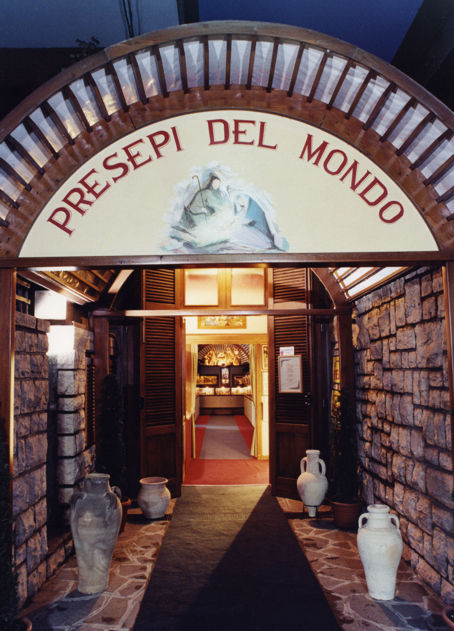
 When talking about crib scenes a date usually crops up, Christmas 1223, when St. Francis is said to have "invented" this form in Greccio (Rieti). While St. Francis' mystery can be considered an important passage in the tradition which has been passed down to us, it remains a fact that the crib scene does not have a precise "date of birth", as it developed over the centuries through diverse customs and forms, in paintings and sculptures in churches, and in mysteries
It is worth emphasising an unusual fact: today missionary sensibility insists strongly on the need to inculcate the gospel in different ethnic and territorial situations. Well, it can be said that the crib scene is a tradition which has vividly expressed an interpretation of the Christian Event for a long time in the historic experience of all peoples. 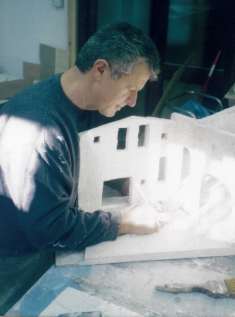 In fact the crib scene is a tradition which involves all Christian countries and all Christians in different countries, and each has their own way of celebrating and portraying the birth of Christ. Each population makes their crib scene in their own way, using the imagination of their own area according to the spirit of the faith.
 Within this tradition a passion for the crib scene developed, a passion which characterises the life and commitment of Carlo Battista Castellini born in Bornato di Cazzago San Martino (Brescia). Fascinated by crib scenes since he was a child, it was his father Francesco who in particular passed on his love for the crib scene to his son Carlo, a love nurtured with the development and growth of the religious sense of life, together with an innate artistic taste. This spirit found unexpectedly fertile ground to develop in two directions: professionally, because Carlo Castellini is a carpenter and culturally, inspired above all by his habit of travelling, to discover districts all over the world, looking for typical crib scenes wherever he goes.